
Blog
Bridal Hair Vines: How to Wear One, and Which Hairstyles They Suit


A hair vine is the only thing I make that a bride sometimes opens and says, quietly, “is this it?”
It arrives looking like almost nothing. Two thin lengths of silver wire with pearls and small stones wrapped along them, curled up in tissue. No shape, no height, nothing that announces itself the way a tiara does in the box.
Then it goes into the hair and it becomes the piece everyone photographs. That gap between how a vine looks in the hand and how it looks in the hair is the reason most brides skip them, and the reason the ones who do wear them send me the most photographs afterward.

What a hair vine actually is
A tiara is a fixed arc. A headband is a fixed curve. A hair vine is neither — it is flexible wire, and it takes the shape you give it.
That is the whole design. The wire bends by hand, holds the bend, and follows whatever the hair is doing. It can trace the edge of a braid, wrap the base of a bun, or sit low behind the ear along a loose wave.
- It has no fixed front. You decide which end leads.
- It has no height, so it never competes with a veil and never looks costume.
- It bends around the hairstyle instead of asking the hairstyle to accommodate it.
- It weighs almost nothing, which is why brides forget they are wearing one by the afternoon.
If a tiara is a statement, a vine is punctuation. It goes where the eye already travels.
Why it comes as two pieces, and what to do with the second one
Mine come as a pair, and this confuses people more than anything else about the product, so here is the plain answer.
Two pieces give you a mirrored set. Hair is not symmetrical and neither is a bridal hairstyle — there is almost always a heavier side and a lighter side. One piece alone leaves the other side bare, and in photographs taken from that side the piece disappears entirely.
Three ways brides use the pair, in the order I see most often.
- One on each side, angled toward the back so they almost meet behind an updo. This is the safest arrangement and it photographs well from every angle.
- Both on the same side, one above the other, to build a denser run of sparkle along a side-swept style. This is the most dramatic option.
- One in the hair, one held back. Some brides use the second piece on a bridesmaid, on the mother of the bride, or on their own hair at the reception after the veil comes off.
Which hairstyles a hair vine actually suits

This is where I can save you money, because a vine is wrong for some hair and nobody says so.
- Updos, chignons and low buns. The best case. The vine wraps the base of the knot and turns a plain bun into the thing people ask about.
- Half-up styles. Very good. Place it where the hair is gathered, so it sits on the join and hides the elastic.
- Braids of any kind. Excellent, and the reason vines exist. Thread it along the outside edge of the braid so it follows the pattern.
- Loose waves worn down. Good, with one condition — the hair needs texture. A vine on flat, freshly washed hair slides down within an hour.
- Very short hair, chin length or above. Skip it. There is not enough hair to anchor into, and a crystal headband will do far more for you.
- A very tight, very smooth ballerina bun. Skip it. The surface is too slick and the vine has nothing to grip.
The pattern is simple: a vine needs somewhere to hide its anchor points. Wherever the hair is gathered, twisted or layered, the vine works. Where the hair is one flat sheet, it does not.
How to put one in so it stays
Five minutes, done by whoever is doing your hair, ideally at the trial rather than on the morning.
- Shape it first, off the head. Bend the wire into roughly the curve you want before it goes anywhere near the hair. Hold it against the style, look, adjust, and only then place it.
- Anchor both ends with a bobby pin the same color as your hair, crossed over the wire, not through it. Two pins per piece is enough if the hair has texture; four if it does not.
- Push each pin in against the direction the hair falls, then turn it back. That turn is what stops it sliding out. A pin pushed straight in will work its way loose by the reception.
- Leave the last two centimetres of wire unpinned. That free end is what makes a vine look like it grew there rather than being fitted.
- Spray after, never before. Hairspray on the hair first makes the surface slippery; spray once the vine is in and it locks everything.
And the test: shake your head, hard, once. If it moves, add one pin. If it does not, you are done for the day.
Wearing a vine with a veil
This is the vine’s quiet advantage, and the reason I recommend one to brides who are worried about the whole headpiece question.
A tiara and a veil compete for the same few centimetres at the crown. A vine does not. It sits lower and flatter, so the veil comb goes in above or behind it without moving anything, and taking the veil off at the reception does not disturb the vine at all.
So if you want to wear something in your hair for the ceremony and still have it look right at eleven at night with the veil gone, a vine is the piece that survives both. I wrote the longer method for the harder case, a veil with a tiara, if that is where you have landed instead.
What I make, and what they cost
My hair vines run from 120 to 165 dollars for the pair, which is below what my tiaras cost, and they are all handmade to order in my Istanbul studio in four to twelve working days with free FedEx shipping.
The Pearl and Swarovski Crystal hair vine is the one I send most often — freshwater pearls and clear stones on silver-plated wire, about 13 cm long, which is enough to run along a braid or wrap a bun. The Royal Side hair vine is shorter and denser at 11 cm, better for a single strong placement behind one ear. The Marquise Swarovski crystal and pearl vine is the brightest of them under evening light, and the Sparkling Leaf vine is the one built on a gold base for warm colouring.
If you are choosing between a vine and something with more presence, I compared a headband against a tiara in detail, and wrote about whether crystal is worth the money in the pieces themselves.
One honest warning
A hair vine is the piece most likely to be wrong if you buy it without showing it to the person doing your hair.
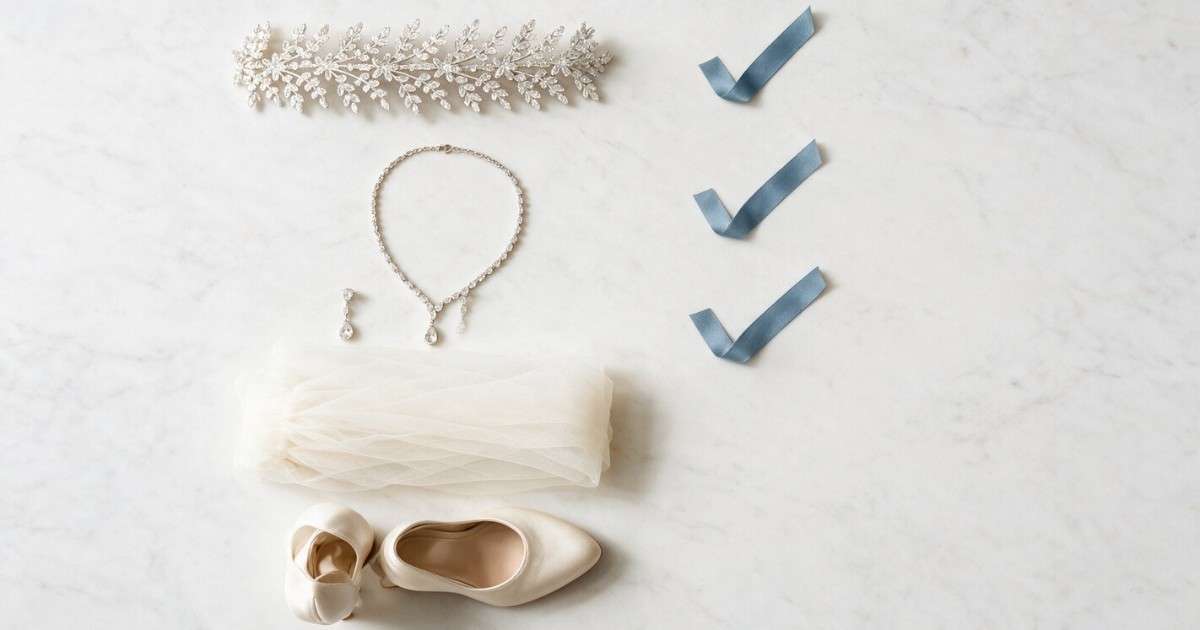
A tiara sits where a tiara sits. A vine depends entirely on the hairstyle around it, and a stylist who has not seen it will improvise on the morning. Bring it to the hair trial, in the box, and have them fit it then. That one step is worth more than anything else on this page, and it is why the vine sits at step 5 on my bridal accessories checklist, right after the trial and not before it.
If you send me a photograph of the hairstyle you are planning, I will tell you honestly whether a vine will hold in it. Sometimes the answer is no, and I would rather say so than have it slide out during the speeches.