
Blog
Winter Wedding Jewelry: What Actually Works in Cold Light

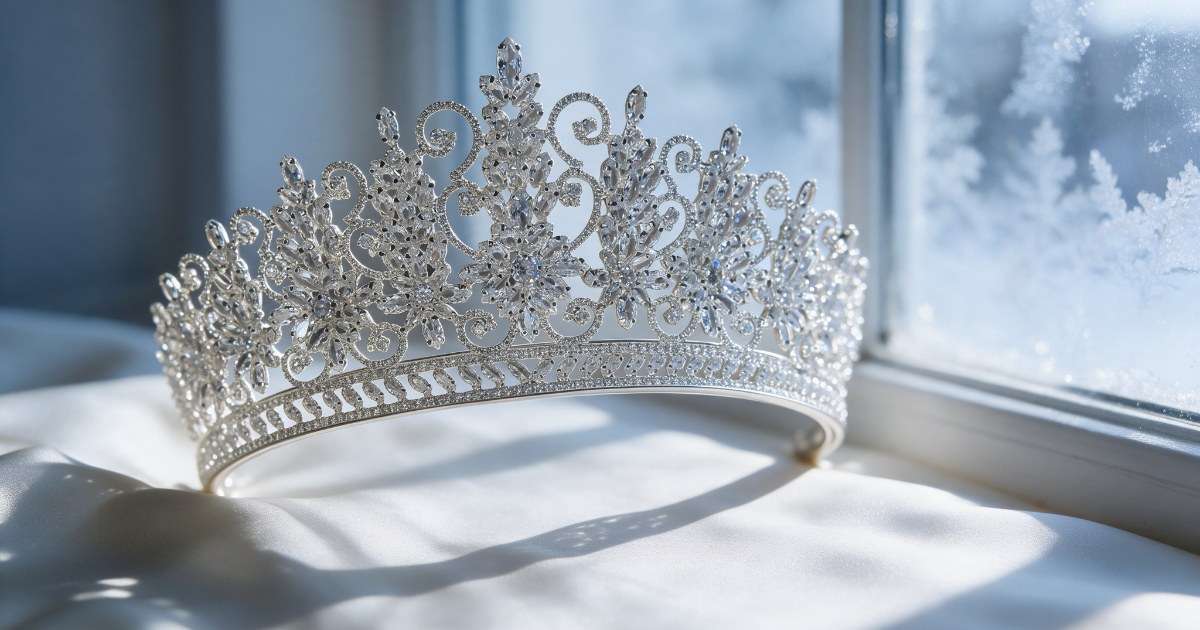
Winter light is the hardest light a bride will ever be photographed in, and almost nobody warns her about it.
Think about what a January wedding day actually looks like in Chicago or Boston or upstate New York. Outdoor portraits at three in the afternoon under a flat white sky, with snow bouncing cold light up into the face from below. Then a reception that runs entirely on candles and warm indoor bulbs. Those two lights are opposites, and jewelry that works in one can vanish in the other.
I have been making bridal pieces for five years and winter brides send me more photographs afterward than any other season, usually with the same sentence: it looked incredible in the church and it disappeared outside. So here is what I have learned about winter wedding jewelry, from the bench rather than from a trend list.

The problem: snow is a giant reflector
Snow throws light back up. That is why winter portraits have that soft, shadowless look on the face, and it is also why a lot of jewelry stops working outdoors.
Cut stones need a single strong light source to work with. They take a beam, bounce it around inside, and send it back out as a point of white or a flash of color. Under a flat gray sky with snow scattering light from every direction, there is no single beam. The stone gets light from everywhere, so it returns light everywhere, evenly, and evenly means dull.
Meanwhile the same piece under a chandelier at the reception is doing exactly what it was designed to do.
So the honest answer for a winter wedding is not one material. It is understanding that you will be photographed in two different lights, and choosing a piece that does not collapse in either.
What works outdoors in the snow
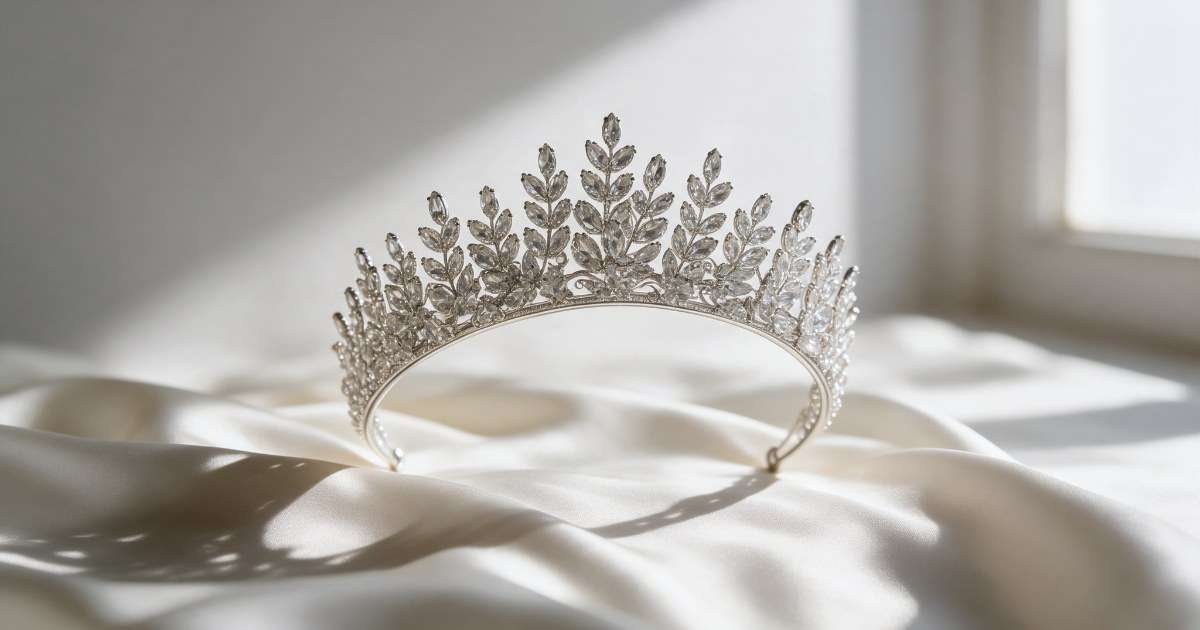
- Volume beats brilliance. Outdoors, a piece with real physical size and shape reads in a photograph even when the stones are not flashing. A tiara with height and open scrollwork keeps its silhouette against a white sky; a flat, delicate piece disappears into the background.
- Contrast against the hair matters more than sparkle. Against snow, everything pale washes together. A silver piece in dark hair reads beautifully. A silver piece in very blonde hair, photographed against snow, can vanish entirely.
- Pearls hold up better than most people expect. A pearl does not need a beam of light; it glows from soft, diffuse light, which is exactly what snow provides. Pearls are the one material that performs better outdoors in winter than indoors.
- Avoid tiny scattered stones. Small stones with nothing around them read as gray dots in a flat-light photograph.
What works indoors under candles
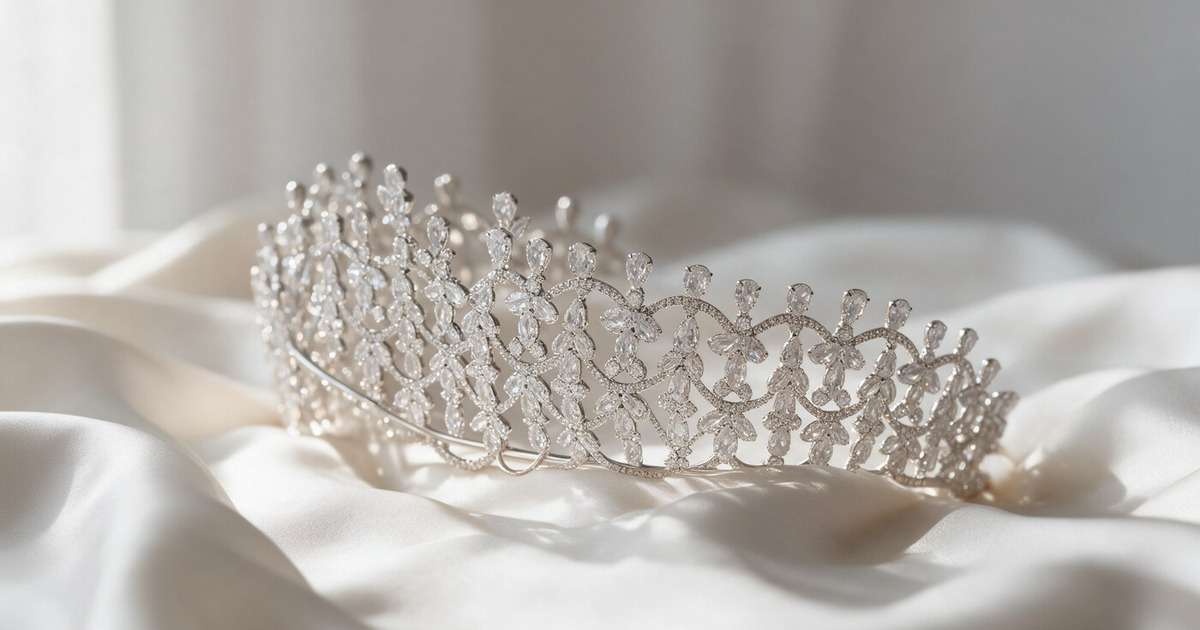
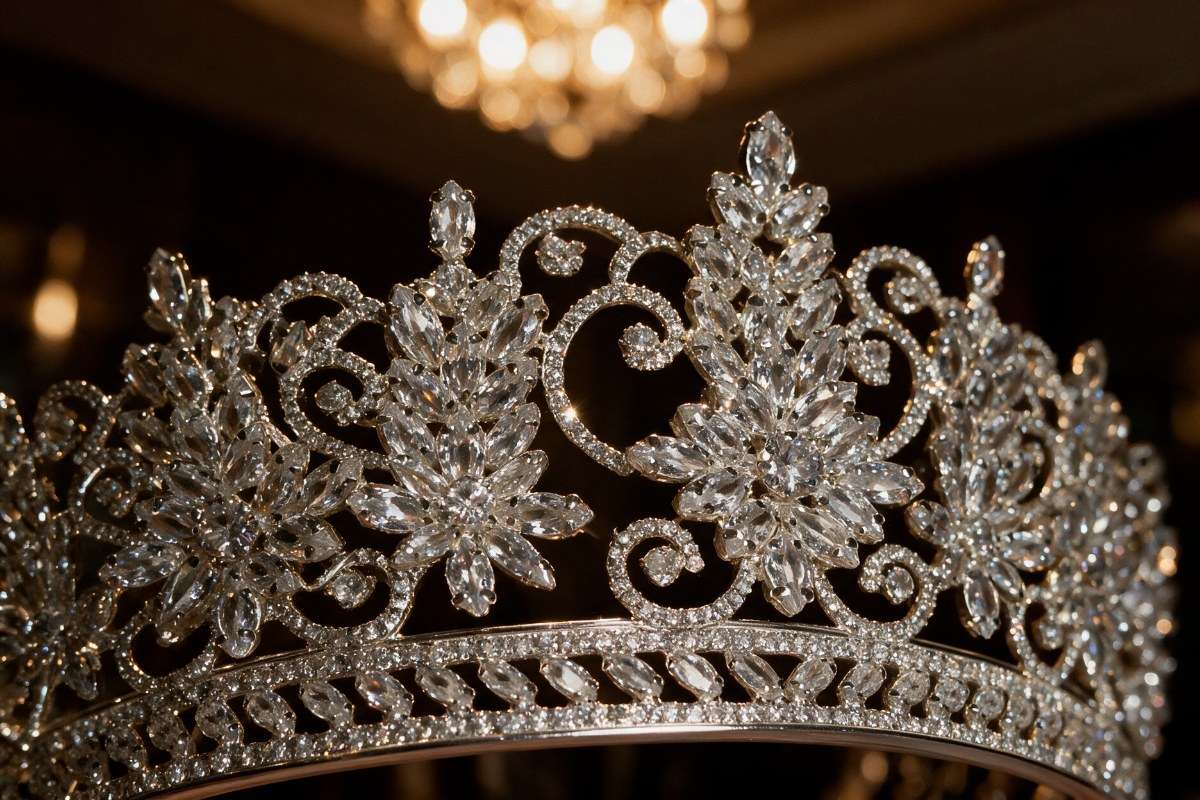
This is where cut stones earn their place. Candlelight and warm bulbs are point sources, and a marquise or teardrop cut will pick up a flame across a room and throw it back.
If your reception is in a barn with string lights, a hotel ballroom with chandeliers, or a restaurant with candles on every table, a crystal piece is doing its best work there. I wrote about the difference between stone types in are Swarovski crystal tiaras worth it, and the short version is that precision-cut stones take a small warm light and return it as a sharp point, while cheap molded glass returns a dull glow.
Pearls in winter: the correction nobody makes
Here is the piece of advice I give most often in winter, and it goes against what most bridal blogs say.
The usual line is that pearls are for summer and crystals are for winter, because crystals look like ice. In practice it is closer to the reverse.
Winter does two things to skin. Cold makes it flush unevenly at the cheeks and nose, and indoor heating dries it out, which makes it look flatter under a camera. A pearl sits close to the skin and returns warm, soft light, which evens both of those out. A cold white crystal right beside the jaw or the ear can emphasize the flush rather than soften it.
So my usual winter recommendation is not pure crystal and not pure pearl. It is crystal high on the head where it catches the room, and pearl lower down, near the face and the throat, where it warms the skin. The Moonlit Pearl Tiara is built on that idea, with pearls carrying the piece and a few crystals only at the edges.
Metal in winter, and why silver sometimes looks gray
Brides tell me their silver looked gray in the winter photographs, and they usually blame the piece. It is almost never the piece.
A polished silver or rhodium surface is a mirror. It shows whatever is around it. Outdoors on an overcast winter day, everything around it is gray, so the metal reads gray. Under warm reception light, the same metal reads warm and bright.
Two things fix this. First, pick a piece where the metal is mostly hidden behind stones, so there is very little bare surface to reflect the sky. Second, if your outdoor portraits matter most to you, consider gold. Gold has its own color and does not borrow gray from the sky. I went through the full metal decision in gold or silver with an ivory dress.
The practical winter problems nobody mentions
- Static. Dry indoor heat plus a veil plus fine hair equals a veil that clings and lifts. A light leave-in conditioner the morning of, and a thin sheet of tissue run down the veil before the ceremony, both help. This matters more than the jewelry choice, honestly.
- Cold metal on skin. A tiara that has been in a cold car is genuinely uncomfortable going on. Keep the piece indoors with you, not in the car with the flowers.
- Heavy fabrics change the balance. Winter dresses use mikado, heavy satin and velvet, and winter brides often add a faux fur wrap or a long-sleeved topper. A wrap at the shoulders competes directly with a necklace. If you are wearing one for the portraits, put the money into earrings and the headpiece, and skip the necklace.
- Coats and hair. Getting a coat on and off over an updo will move a headpiece. Pin it after the coat comes off, not before.
- Short days. In late December, usable outdoor light in most of the northern United States is gone by about half past four. Ask your photographer when the outdoor portraits will actually happen, then choose for that light.
Three winter combinations that work
- Snowy outdoor ceremony, candlelit reception. A crystal tiara with real height and open shape, like the Crystal Snowflake Tiara, plus pearl earrings. The tiara carries the reception, the pearls carry the face outdoors.
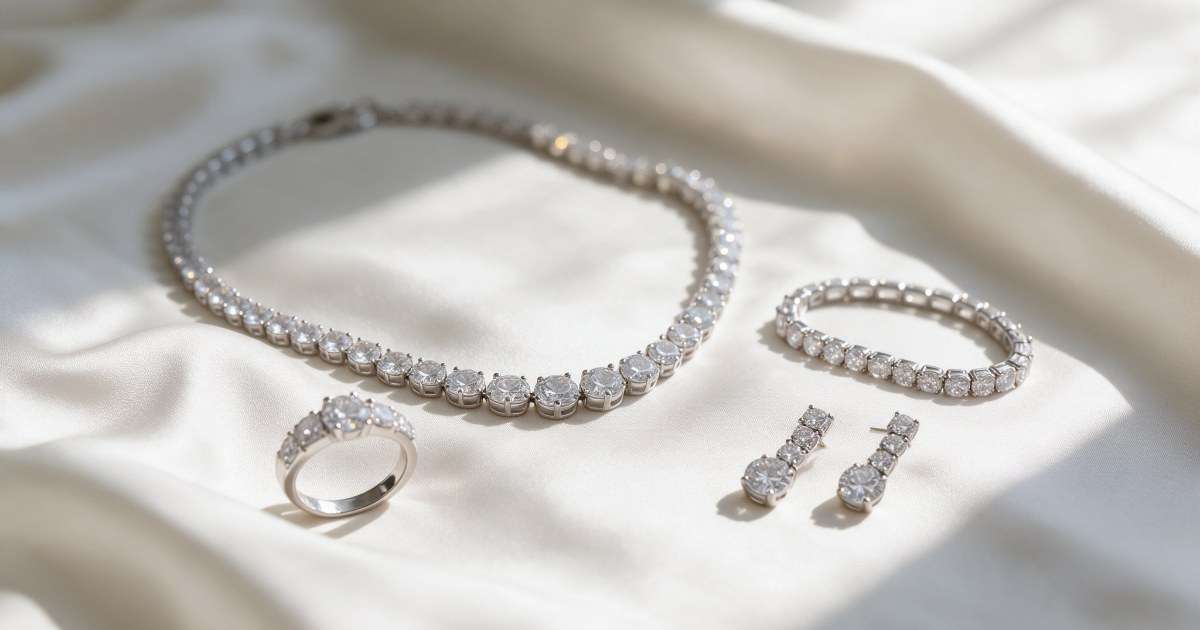
- Indoor ceremony, evening reception, no outdoor portraits. Full crystal. This is the one case where you can commit completely. The Swarovski crystal bridal tiara or the Queen Crown with teardrop stones, with a tennis necklace if your neckline is open.
- Daytime winter wedding, lots of natural light, heavy dress. Pearl-led headpiece, minimal necklace, and let the fabric do the work. A crystal headband sits better than a tiara here if your hair is down against a collar or a wrap.
What I would tell you if you wrote to me
Send me three things: a photograph of the dress, the month and the state, and one sentence about where the portraits will be taken. That is enough for me to tell you whether you need pearl, crystal or both, and roughly what size piece will hold up in your particular light.
Everything I make is handmade to order in my Istanbul studio, ships free by FedEx and reaches most US addresses in about four business days. Most tiaras sit around 240 dollars.
If you are still choosing the shape of the piece rather than the stone, I wrote about headband versus tiara and about wearing a veil with a tiara, which matters more in winter than in any other season, because the veil is fighting static and a coat all day.
Winter is the best season to be photographed in, if the jewelry is chosen for the light instead of the calendar.